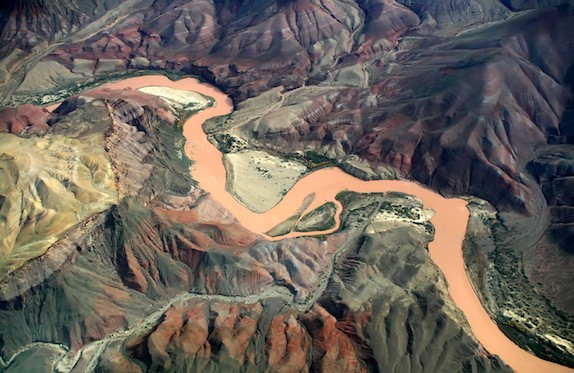
The Colorado River is one of nation’s most majestic rivers – flowing through varied ecosystems and climates; it is home to thousands of animals, plants and fish. Photographs attempt to capture its spectacular beauty, but seeing the Colorado with your own eyes is truly an experience. It is here, smack dab in the middle of the Grand Canyon, where the Colorado River revels in its glory. In fact, it is here where it is easy to see why the mighty Colorado River contributes to making the Grand Canyon one of the 7 Natural Wonders of the World.
The primary river of the Southwest, the Colorado flows through seven states – Wyoming, Utah, Colorado, Arizona, New Mexico, Nevada and California. It begins its southwestward flow from its headwaters, nestled within the Rocky Mountain National Park in Colorado, and moves toward the Pacific Ocean.
Its journey to the Grand Canyon are unique in that by the time the water arrives at the Grand Canyon – at Lee’s Ferry – its altitude has dropped more than a mile since its start. It will drop another 2,200 feet before it reaches Grand Walsh Cliffs, located at the other end of the Canyon. This dramatic drop in elevation, which has been going on for centuries, means the Colorado is one of the most powerful rivers in the world, leaving little wonder as to how it sliced such an impressive gash into Arizona’s landscape.
A Defining Feature of the Grand Canyon
Today, the Colorado River displays a brilliant blue-green hue but it wasn’t always that way. Centuries ago, the Spanish named river, the Red River after its reddish-brown color as the river was known to carry tons of silt and sediment each day. After construction of the Glen Canyon Dam in 1963, the silt and sediment were trapped behind the dam in Lake Powell. Of course, with the construction of the dams, the fish, historically unique to the Grand Canyon, suffered. Today, most of the river’s native species such as the Humpback Chub, Razorback Sucker and Speckled Dace are low in population.
Within its boundaries of the Grand Canyon National Park, the Colorado River drains an area a little more than 41,000 miles. The Colorado River can even be seen from the very top of the Canyon. Peering down toward the bottom, visitors will see its winding trail cutting through the rocky terrain. A variety of mammals such as beaver, river otters and muskrat have made the river its home.
Each year, hundreds of people navigate the Grand Canyon portion of the Colorado River. It’s a relaxing, fun and often exhilarating adventure, but rarely life threatening. This wasn’t always the case, however. Without the regulation of water flow, the Colorado used to be a river that claimed lives. Native American tribes held a healthy respect for its power and warned settlers away from trying to run it. Some listened; others did not and perished along the way.
Today, with more than 5 million visitors to the Grand Canyon each year, the Colorado River sees its fair share of visitors. River enthusiasts can hike to the bottom of the canyon to kayak, boat and tackle the rapids aboard motorized and nonmotorized rafts.
The Colorado River is a dramatic and beautiful part of the Western landscape. The Grand Canyon’s 277 unhindered miles provide a haven for plants, animals and spectators enjoying the resources and beauty it provides. Those that travel its length are rewarded with unique and breathtaking views of one of Mother Nature’s most awesome creations.
Did You Know? The Wildlife Program at the Grand Canyon utilizes an extensive monitoring protocol at various recreation areas along the Colorado River. This includes engaging in a Fire and Aviation program aimed at ensuring fire practices are designed to improve wildlife habitats.